
How to Build a Strong Mindset
Introduction
1. The 15 Pillars of a Strong Mindset
2. How These Pillars Work Together
The structure
True mental strength
Emotional intelligence
3. Practical Integration
Daily micro-habits
How Journaling Prompts Help (and Become a Micro-Habit)
Creative or body-based practices
How parents, creatives, and educators can apply them
Conclusion
Introduction
A strong mindset doesn’t mean being perfect, always happy, or never struggling. It means feeling steady on the inside, even when emotions are big or days are challenging. It’s the ability to understand what we feel, to be kind to ourselves, and to keep moving forward one step at a time. A strong mindset is not something you are born with—it is something you practice every day, through small choices, words, and moments of attention.

In this journey, we explore 15 gentle pillars that help children and parents grow together, supporting emotional well-being, creativity, confidence, and personal growth—at home, at school, and in everyday life.
1. The 15 Pillars of a Strong Mindset
A strong mindset helps us feel confident, calm, and proud of who we are. These 15 pillars are like invisible superpowers that grow with practice. Everyone can strengthen them—kids, parents, grand parents together—by noticing thoughts, feelings, and everyday actions.
Pillar 1: Confidence
Definition: Believing you can try, learn, and improve—even if you’re not sure.
Examples: Raising your hand in class/participating during meetings; trying a new sport/activity; be grateful on effort, not perfection.
Art journal prompt: Draw yourself doing something brave. Write: “I can try even if I’m scared.”
Pillar 2: Self-Esteem
Definition: Feeling proud of who you are and how you look. It reflects the confidence we have in our capacity to act, make choices, and handle challenges, while recognising both our strengths and our imperfections.
Examples:Be proud for what you did today, and for your body’s health—not its perfection.
Art journal prompt: Draw a badge with one good action you did today.
Pillar 3: Self-Worth
Definition: Knowing you matter just because you exist.
Examples: Feeling okay after a failure; love doesn’t depend on results.
Art journal prompt: Write your name in big letters and decorate it with things that make you special.
Pillar 4: Self-Love
Definition: Being kind to yourself and judgment free when things are hard.
Examples: Taking a break; saying “It’s okay” after a mistake.
Art journal prompt: Draw a heart and write one kind sentence to yourself.
Pillar 5: Resilience
Definition: Getting back up after something goes wrong.
Examples: Trying again after a challenge and sharing comeback stories with friends or parents, remembering you’re not alone.
Art journal prompt: Draw a mountain and yourself climbing back up.
Pillar 6: Emotional Management
Definition: Understanding, naming and handling big feelings safely.
Examples: Taking deep breaths and feel your body, what is happening and where.
Art journal prompt: Draw faces for different emotions and color how each one feels.
Pillar 7: Self-Awareness
Definition: Noticing your thoughts and reactions.
Examples: Realizing you’re tired and grumpy.
Art journal prompt: Write: “When I feel ___, my body feels ___.”
Pillar 8: Boundaries
Definition: Knowing when to say yes or no to protect yourself.
Examples: Saying no to respect; yourself, your needs and your space.
Art journal prompt: Draw a circle around yourself and write what you let inside it.
Pillar 9: Growth Mindset
Definition: Believing you can improve with practice.
Examples: Learning from mistakes; and say “not yet” instead of “I can’t.”
Art journal prompt: Draw something you’re learning and write one step to improve.
Pillar 10: Inner Calm
Definition: Being able to feel calm inside, even when things around you feel loud or chaotic.
Examples: Creating calm routines, like breathing slowly before a test or singing.
Art journal prompt: Draw a peaceful place where you feel safe and calm.
Pillar 11: Relationship management
Definition: The ability to build, maintain, and navigate healthy connections with others through clear communication, empathy, respect, and cooperation.
Examples: It involves understanding others’ emotions, handling conflicts calmly, setting boundaries, and nurturing trust over time.
Art journal prompt: Draw a bridge between you and another person. What helps the bridge feel strong (communication, trust, kindness)? What weakens it? Add words, colours, or symbols to show how you care for your relationships
Pillar 12: Adaptability
Definition: Being flexible when plans change.
Examples: Adjusting when an activity is canceled.
Art journal prompt: Draw two paths and show yourself choosing a new one.
Pillar 13: Gratitude
Definition: Noticing good things around you.
Examples: Thanking yourself, someone or god/ universe
Art journal prompt: Draw three things you’re thankful for today.
Pillar 14: Self-Discipline
Definition: The ability to guide your actions and choices to achieve a goal, even when it feels difficult or when motivation is low.
Examples: It means showing up for yourself, staying consistent, and doing what supports your goals and well-being.
Art journal prompt: Draw a calendar and color one small habit you’ll do this week.
Pillar 15: Emphaty
Definition: the ability to understand and feel what another person is experiencing, by seeing things from their point of view and recognising their emotions with care and compassion.
Examples: Listening to a friend without interrupting when they are sad. Noticing when someone feels left out and inviting them to join.
Art journal prompt: Write one sentence starting with: “When I try to understand others, I feel…”
2. How These Pillars Work Together
The structure
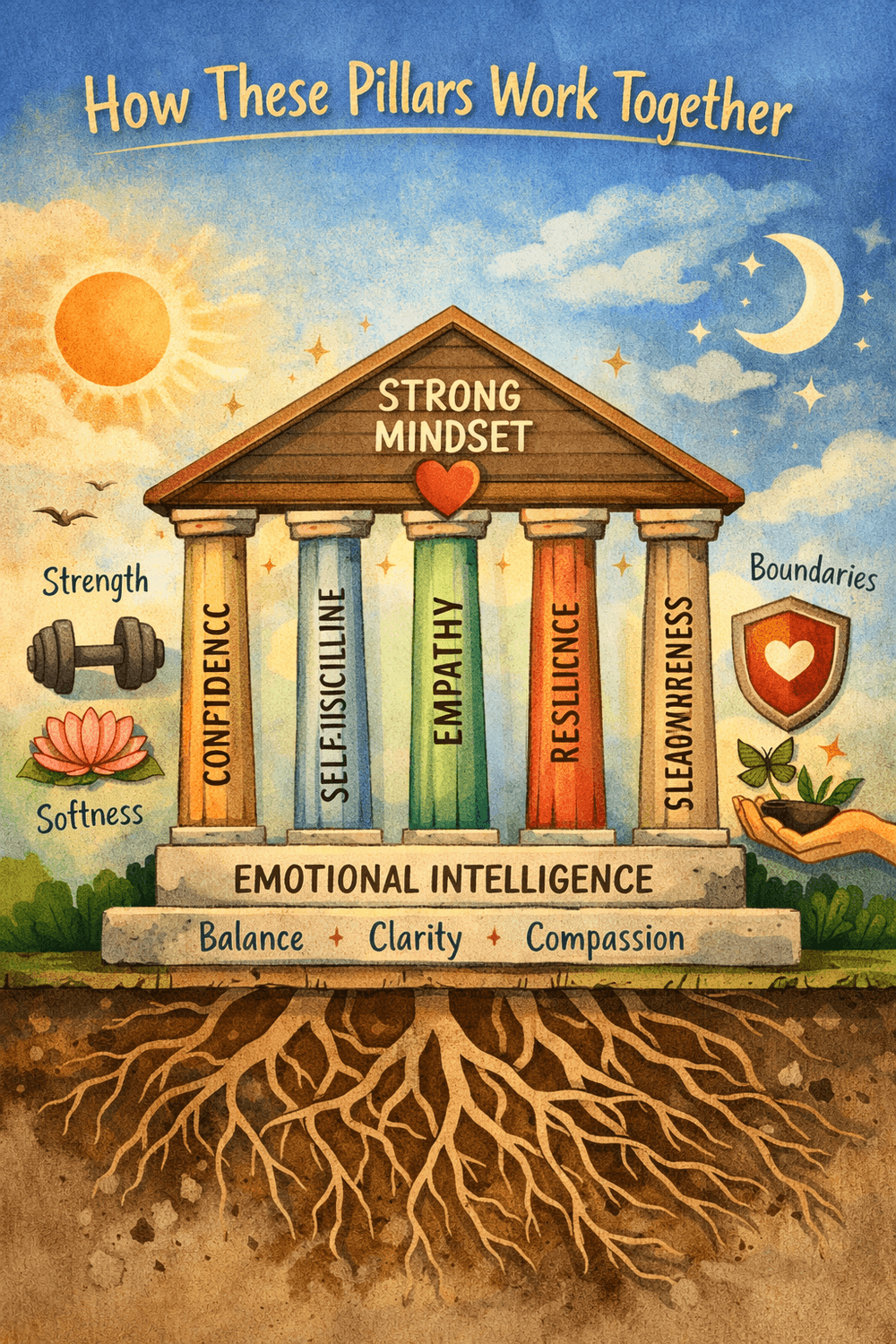
A strong mindset is not built from isolated traits, but from a structure where each pillar supports the others. Confidence without self-awareness can become reckless, while self-discipline without self-love can lead to exhaustion. Like the beams of a house, the 15 pillars only work when they are connected. When one pillar feels weaker, the others can help stabilise the whole structure. This is why mindset is not about “fixing” one part of yourself, but about creating inner balance.
True mental strength
True mental strength comes from the balance between strength and softness. Resilience is powerful, but it needs gentleness to avoid burnout. Boundaries protect us, but empathy keeps us connected. Growth requires courage, but also patience. A healthy mindset allows space for effort and rest, action and reflection, confidence and vulnerability. Strength is not hardness—it is flexibility.
Emotional intelligence
At the heart of all these pillars lies emotional intelligence. The ability to recognise, understand, and regulate emotions is the foundation of mental strength. Emotions guide decisions, shape reactions, and influence relationships. When emotions are welcomed rather than suppressed, they become allies. Emotional intelligence allows all the pillars to work together with clarity, compassion, and stability.
3. Practical integration
Daily Micro-Habits
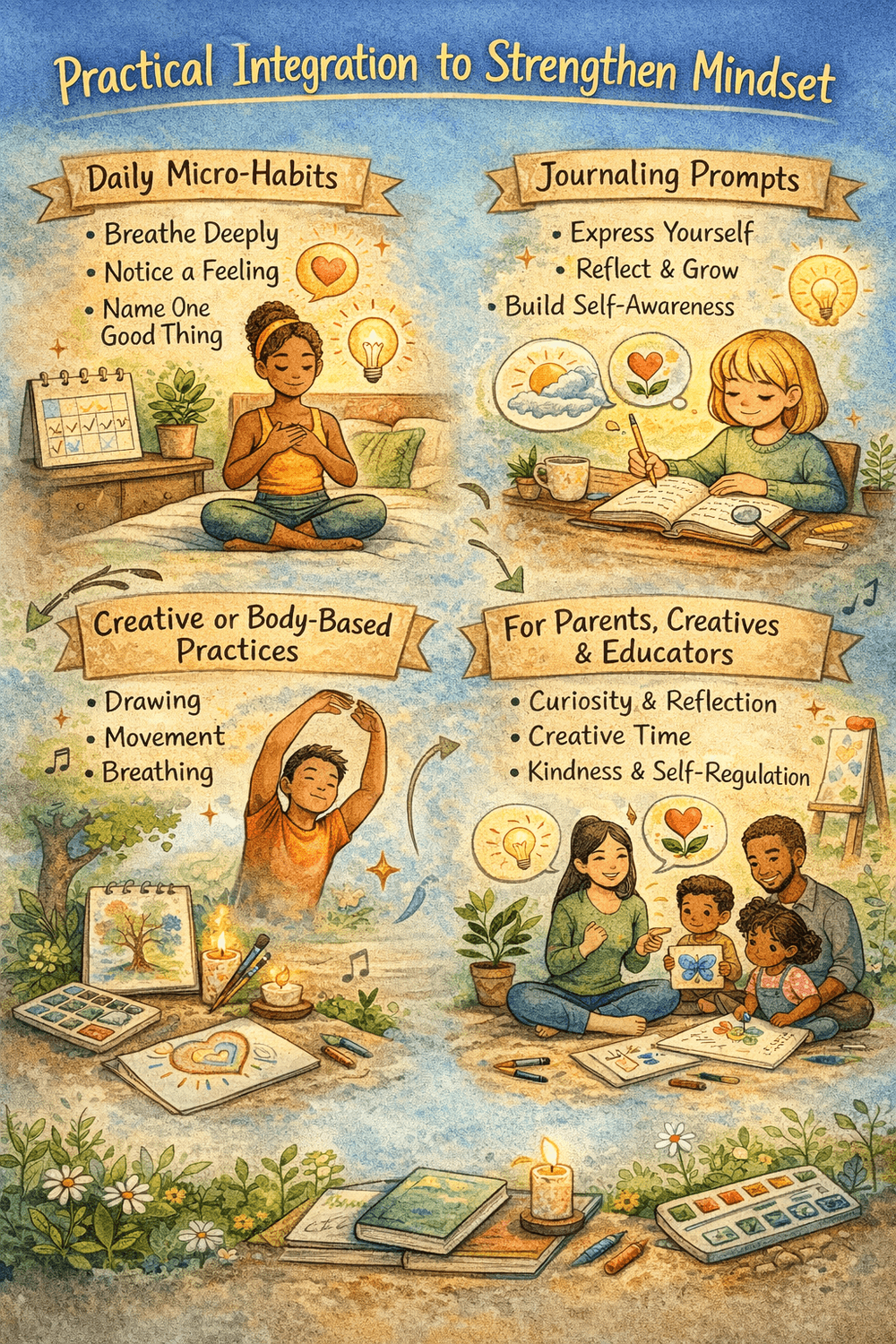
A strong mindset is built through small, consistent actions rather than big changes. Daily micro-habits—like taking three deep breaths, naming one emotion, or noticing one positive action—create steady inner growth. These simple practices help train the brain toward awareness, resilience, and self-trust without feeling overwhelming. Over time, small habits shape lasting mental strength. Read this : Tiny wins, Big impact: How Daily Creative Acts Boost Self worth over time
How Journaling Prompts Help (and Become a Micro-Habit)
Journaling prompts offer a gentle way to reflect, express emotions, and build self-awareness. Even a few minutes of writing or drawing can help process thoughts and feelings. When done regularly, journaling becomes a powerful micro-habit that supports emotional clarity, self-esteem, and inner calm. Creative prompts remove pressure and invite honesty rather than perfection. Read this : The benefits of creative writing on your wellbeing
Creative or Body-Based Practices
Mindset is not only mental—it lives in the body too. Creative and body-based practices such as drawing, movement, breathing, or mindful stretching help release emotions and restore balance. These practices support emotional regulation and grounding, especially when words feel limited. Creativity allows expression beyond language and reconnects us to our inner rhythm. Read This : Dance Your Emotion: A Powerful Path to Confidence
How Parents, Creatives, and Educators Can Apply Them
Parents, creatives, and educators can integrate these practices into daily routines and learning spaces. Simple rituals like shared reflection, creative time, or emotional check-ins encourage safe expression and resilience. By modelling curiosity, kindness, and self-regulation, adults help others develop a strong, balanced mindset through experience rather than instruction alone.
Conclusion
A strong mindset is not something we are born with—it is something we build, day by day, through awareness, practice, and self-compassion. It grows through experience, reflection, and the small choices we make in everyday life. There is no finish line, only a continuous process of learning and becoming.
You don’t need to work on everything at once. Strengthening just one pillar is enough to create change. When one area becomes more stable, it naturally supports the others. Growth happens gently, at your own pace, without pressure or comparison.
Take a moment to pause and reflect: Which pillar needs more attention right now? Let this question guide your next small step, trusting that even the smallest shift can strengthen your inner foundation.